

The Windward Islands
The Stages Part 2
Travelogue Caribbean - Windward Islands
The Grenadines now lie ahead of us. The stops so far have left us with wonderful impressions, but what we imagine the Caribbean to be – white beaches and palm trees – supposedly still lies ahead of us. The crew doesn't like my suggestion for the next anchorage – luckily. So we continue on to Mayreau, a small island just off the Tobago Cays. Just a few more nautical miles to go. Ahead of us, we can see the waves breaking on a reef. It's a fascinating but also frightening sight. Now we have to navigate carefully. We have our sights set on the intended anchorage, but once again we are greeted by motorboats whose drivers want to guide us to their buoys and bays. After a brief discussion, we follow the small boat to the buoys. Once moored, we have a quick chat with Delroy. He tells us that although some sailors use his buoy for a small fee, he cannot survive with his Coconut Beach Bar. At first, I think it's the usual ploy to attract customers, but then I am shamefully proven wrong.
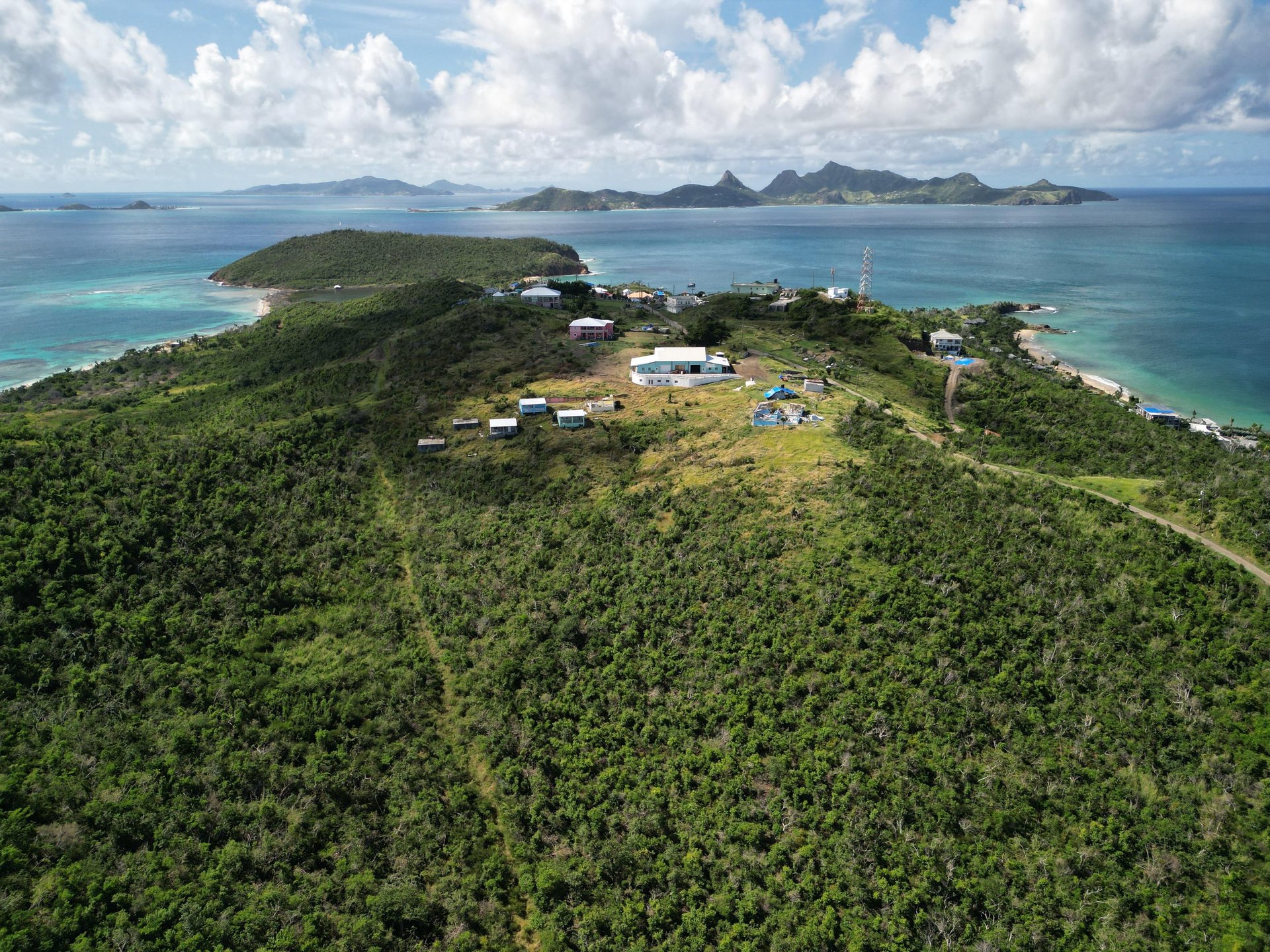
Mayreau was hit terribly by Hurricane Beryl. Hardly any houses survived this natural disaster. Even the massive stone church collapsed. We agree to order red snapper and meet on the beach in the evening. Everything still seems a bit improvised, but when our food is served, we are delighted.
Grenadines, Bequia - Grenadines, Mayreau
Jay
Phone: +1 (784) 434-1660
Not only will Jay assign you a safe buoy at the legendary Salt Whistley Bay. You can reserve a BBQ at the beach. And when you consider that everything here is being rebuilt after the devastating hurricane Beryl, spending an evening here is a must!
Don't miss it, or you won't have truly experienced the Grenadines.
Recommended Contact
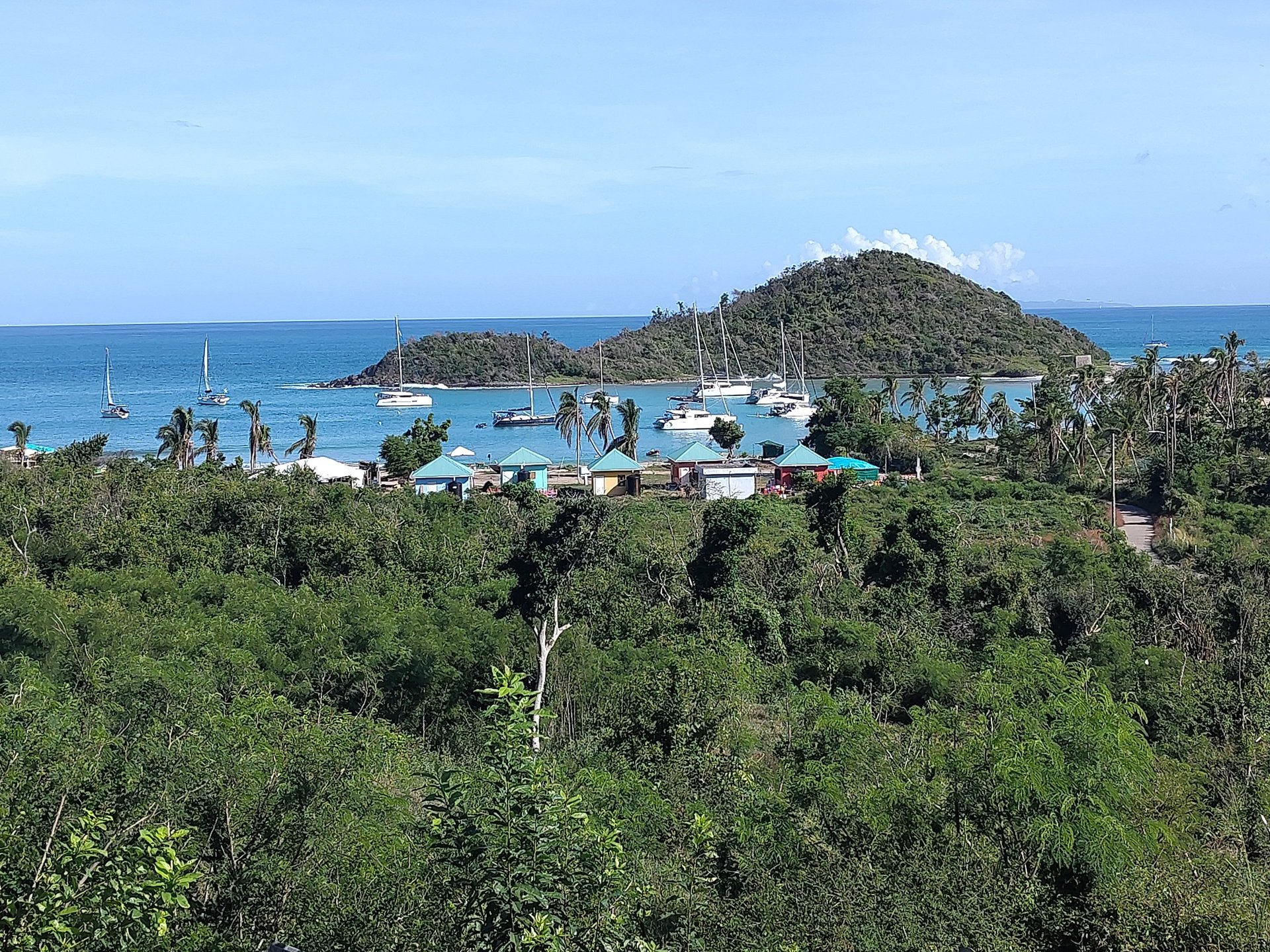
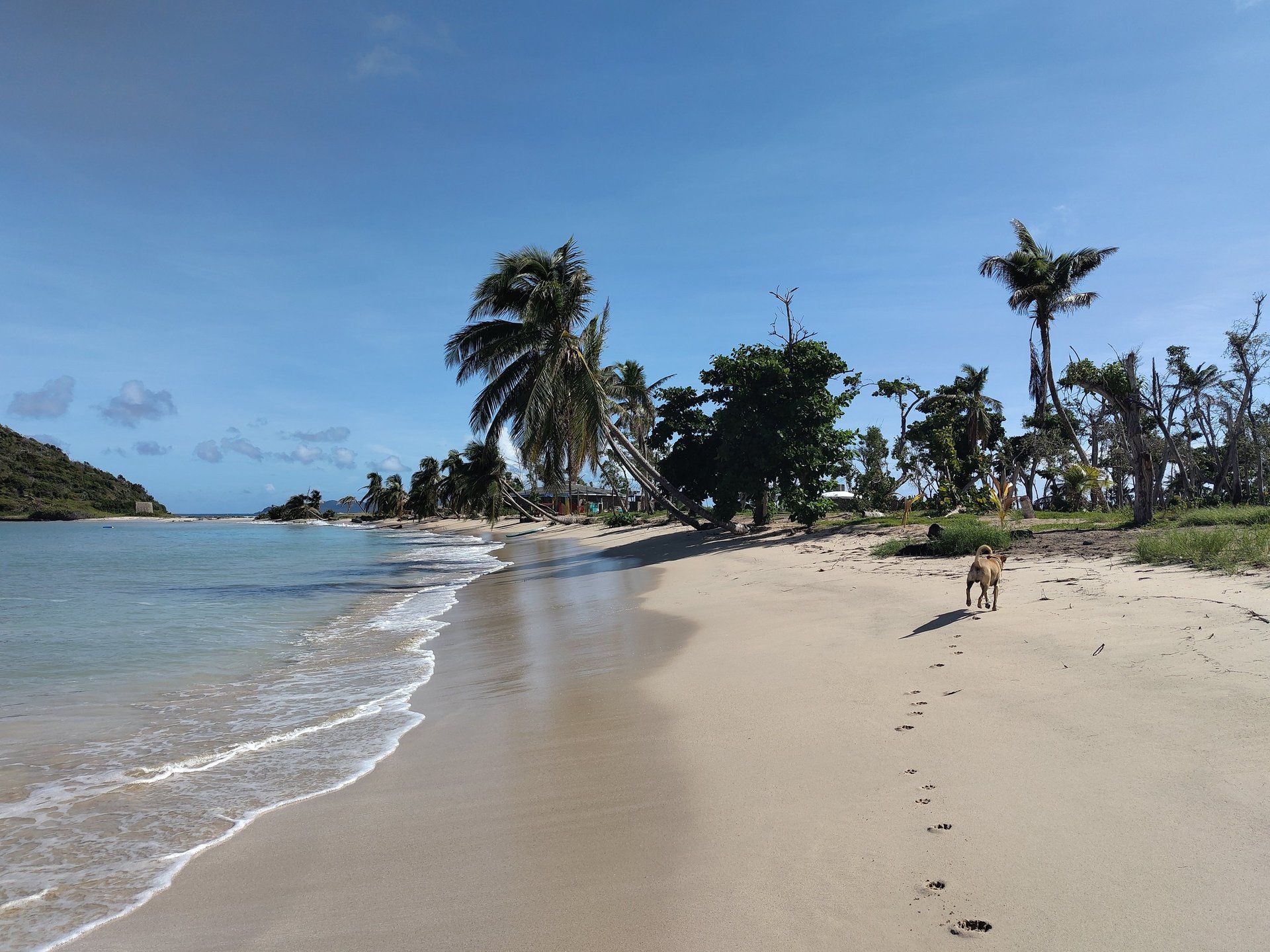
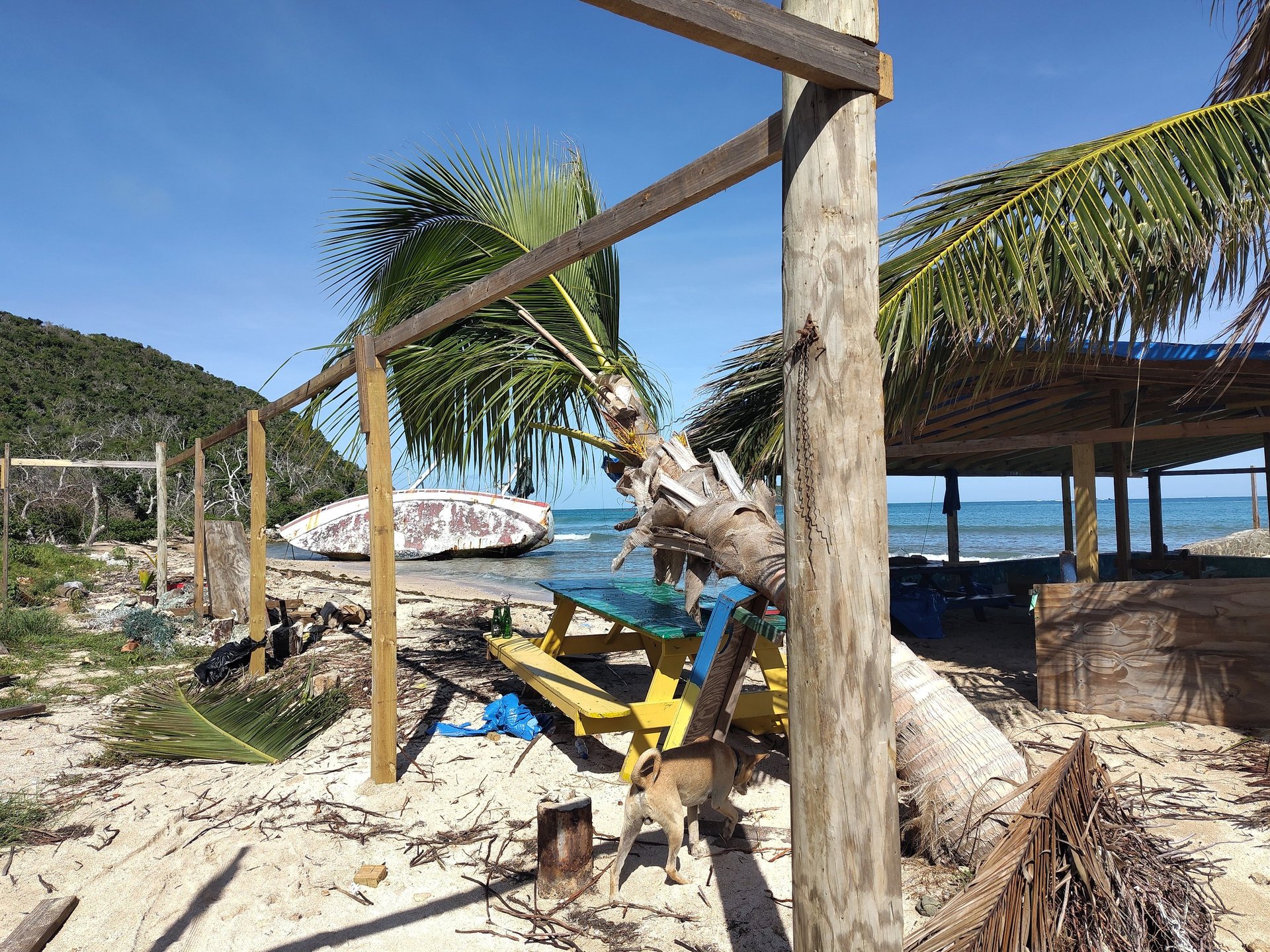
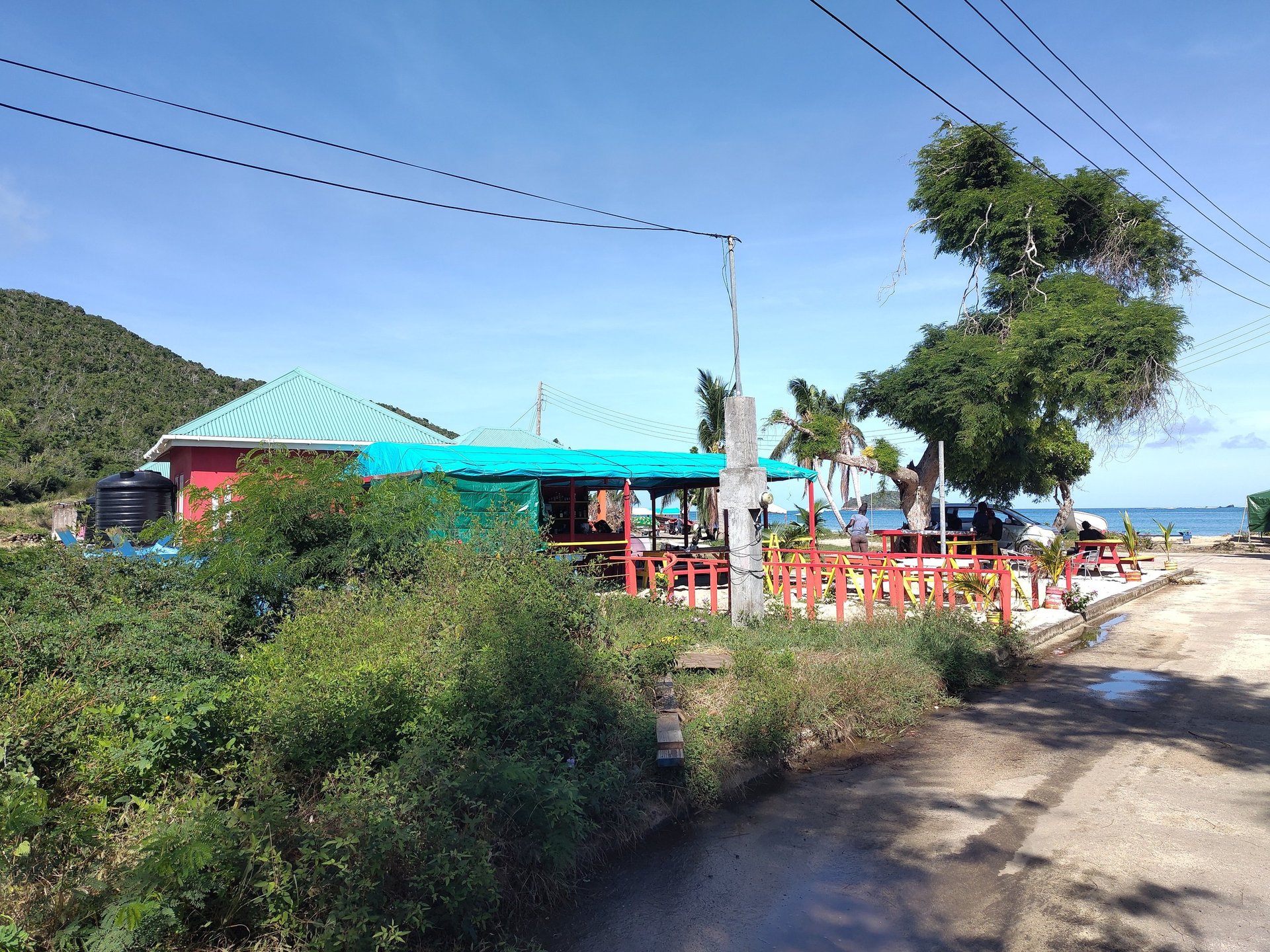
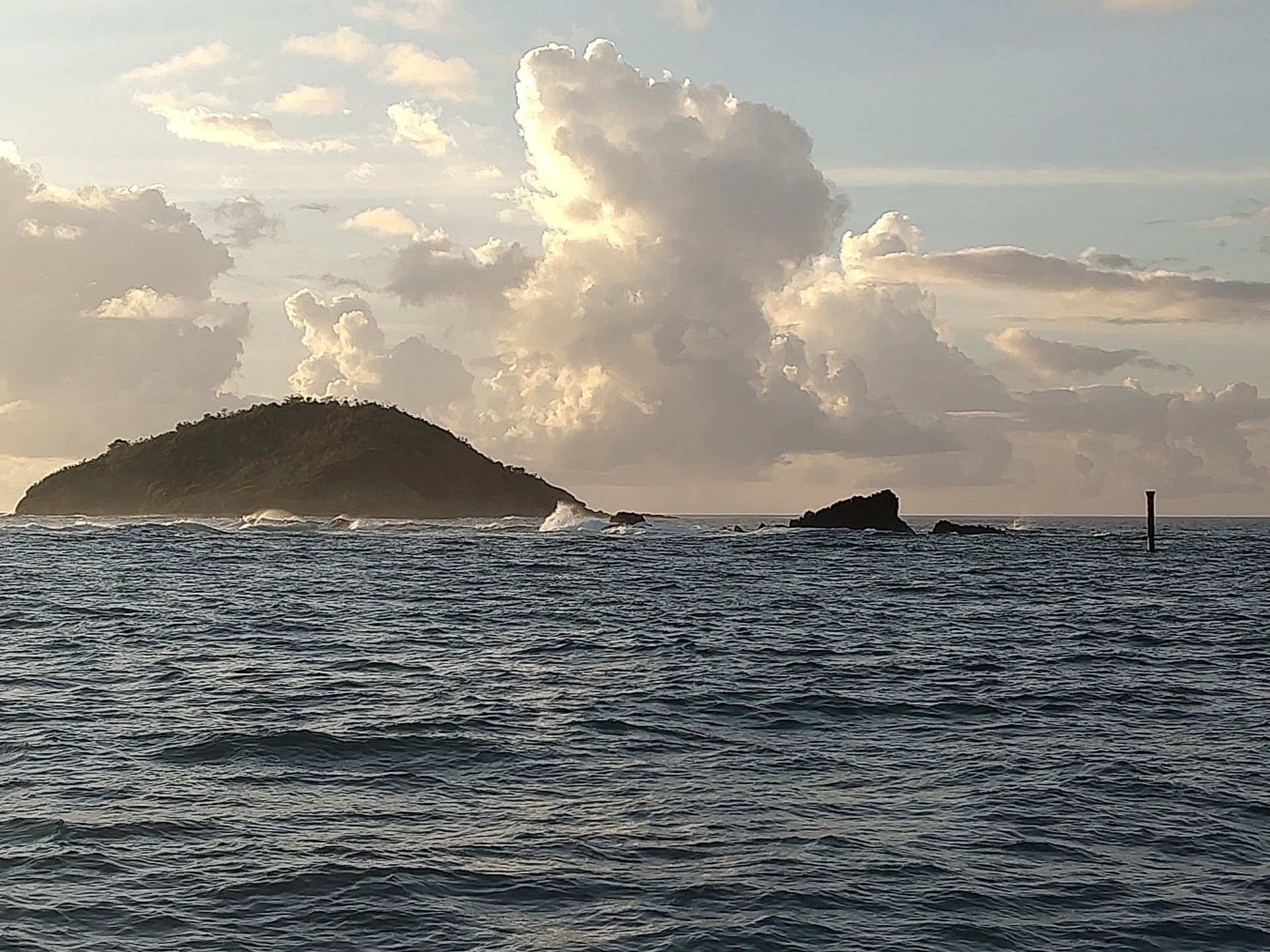
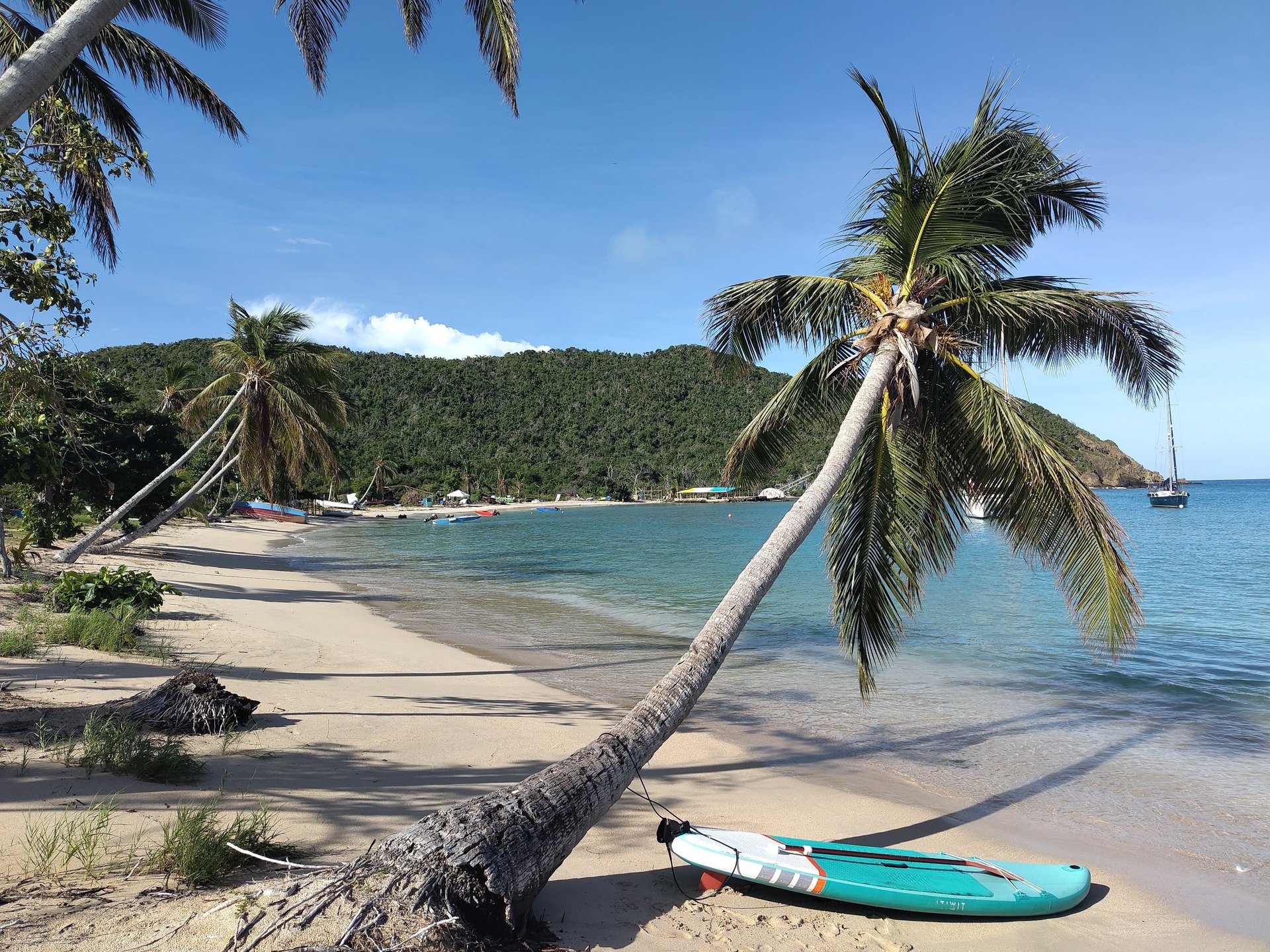
We set off for the Tobago Cays. A navigational challenge. Horseshoe Reef is located off three small islands. Protected from the waves of the Atlantic, a fascinating underwater world opens up before us. Even as we select our buoy, we are overwhelmed by the beauty of these islands. But even more fascinating is that we see many turtles frolicking here. However, the water is not quite as clear as it is sometimes portrayed. The buoys are free, but mooring causes us problems. A strong current between the islands means that we need a few attempts.
This also makes swimming difficult. Despite my flippers, I can hardly manage to stay with the boat. The SUP offers a good opportunity to move around a little between the islands and encounter some turtles. In the evening, we want to enjoy a lobster barbecue at Romeo's. I'm still trying to figure out exactly where this is taking place when Romeo comes towards us on a boat and tells us that we just have to sail around the island of Petit Bateau. That sounds relaxing and our anticipation grows.
Grenadines, Mayreau - Grenadines, Tobago Cays
Romeo
Phone: +1 (784) 531-1200
A unique setting, fantastic food – simply a must-try experience. This is the only place on the island where you can dine out. Not only is the lobster superbly prepared, but the side dishes also leave nothing to be desired. Book well in advance to ensure a wonderful evening. The yacht can be moored nearby at a buoy or suitable anchorage.
Recommended Contact
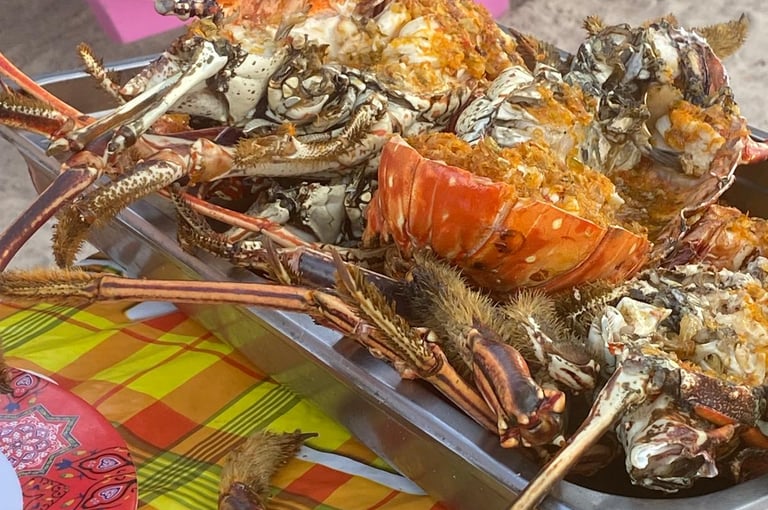
After a while, the lobster is served. The portions are large and we enjoy our meal. Time flies by quickly, and I take a short walk on Petit Bateau, a really tiny island, and gaze at the horizon. The cloud formations suggest that something is coming our way. And indeed, after the crossing, it takes barely an hour before the wind picks up and tugs at our mooring line. As we check our position, we see rays swimming around our ship in the light of our torches. At times, we see four animals at once. It's a fascinating sight.
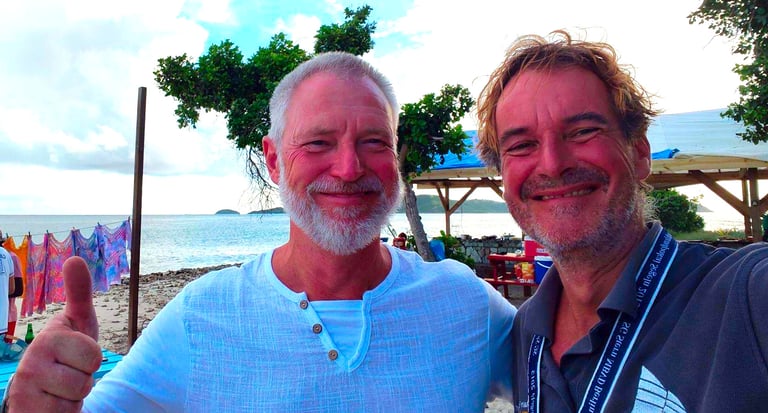
After landing with the dinghy, we are assigned our place at a table. I take a few more photos and admire the clothes on offer – then I think I hear a familiar voice behind me. I turn around, and sure enough, my former colleague and regatta competitor Olaf is standing behind me with his wife. Unbelievable.
Especially when you consider that the three islands of the Tobago Cays are uninhabited and only populated for the lobster dinners in the evening.
We leave the Tobago Cays with wonderful memories and head for the island of Mustique. This private island is famous for its prominent (part-time) residents; Mick Jagger is said to be a regular visitor and Tommy Hilfinger owns a villa here. The melting pot of this gathering place is Basil's Bar, world-famous for its celebrity density.
However, there is no sign of this when we arrive. Beryl has also devastated this place, but the dinghy jetty has almost been restored. The park ranger assigns us a buoy, but it is too close to the ferry that is moored at the jetty and being loaded. The ranger is understanding and assigns us a buoy closer to the shore, but further away from Basil's Bar. The prices for the buoy are immense compared to the other accommodations, and we are charged US$80. This price apparently applies for three days, but we will not be staying that long. Unfortunately, the weather has deteriorated significantly, preventing us from experiencing the magic of the place.
Before we set off into the extensive rain areas, we quickly do some shopping. Despite the rain, the village actually makes a pleasant impression. But for us, it's time to head back. Although we have mostly been able to avoid the rain clouds so far, now we are really caught in it. This gives us an opportunity to try out the rain cover at the helm. As usual, it's a struggle to connect the zips, but then we manage to be reasonably protected.
Grenadines, Tobago Cays - Grenadines, Mustique
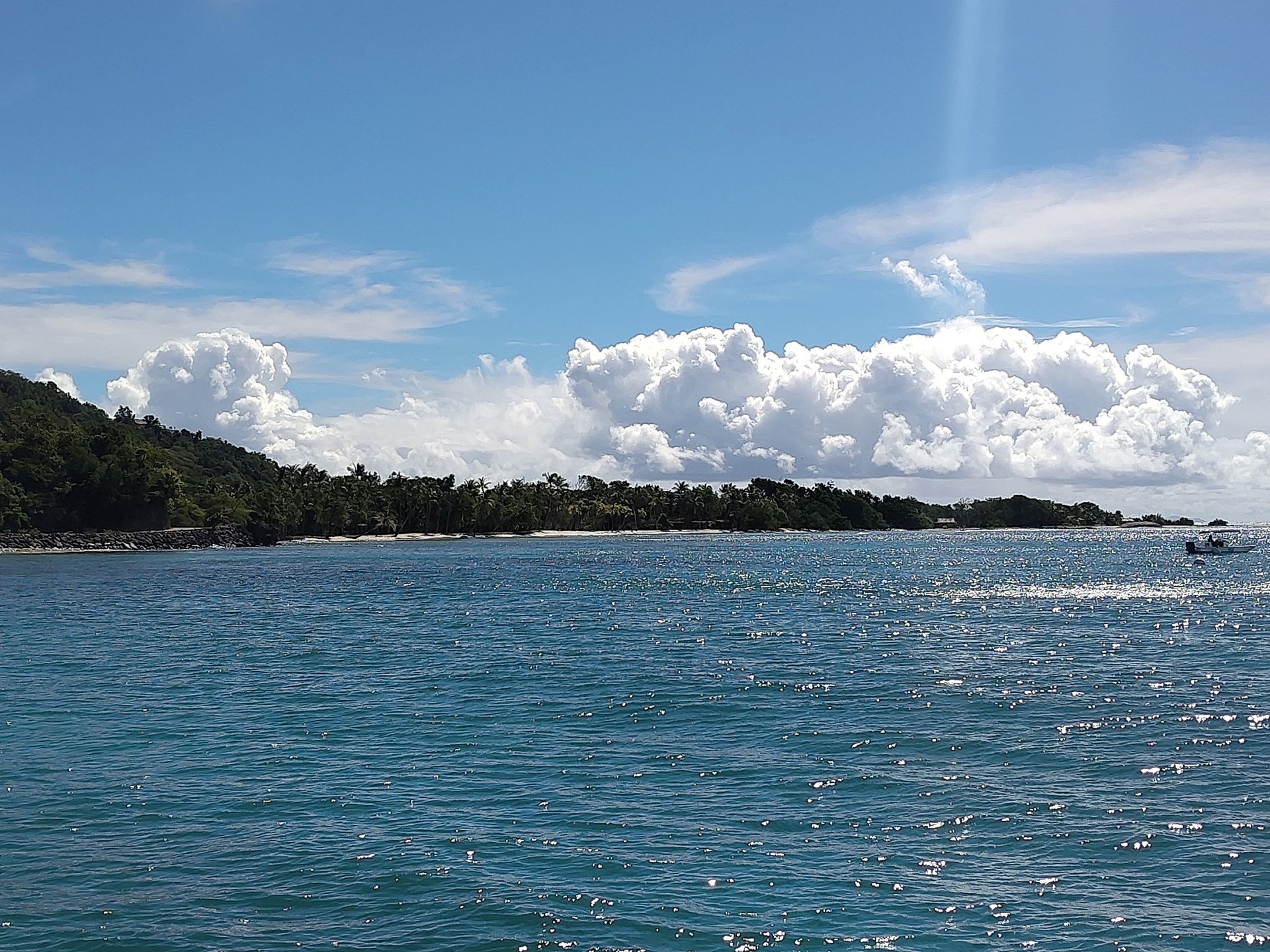
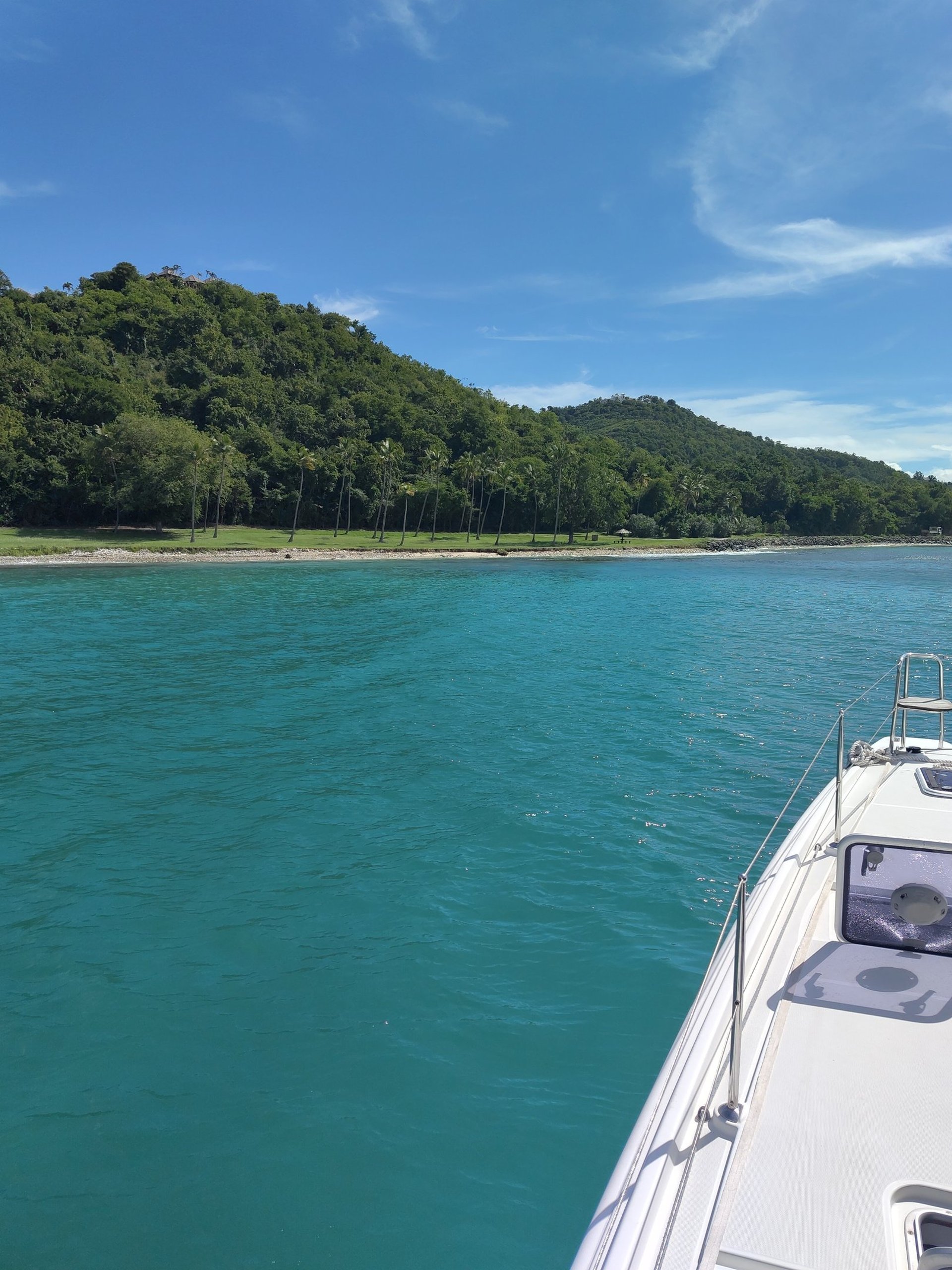
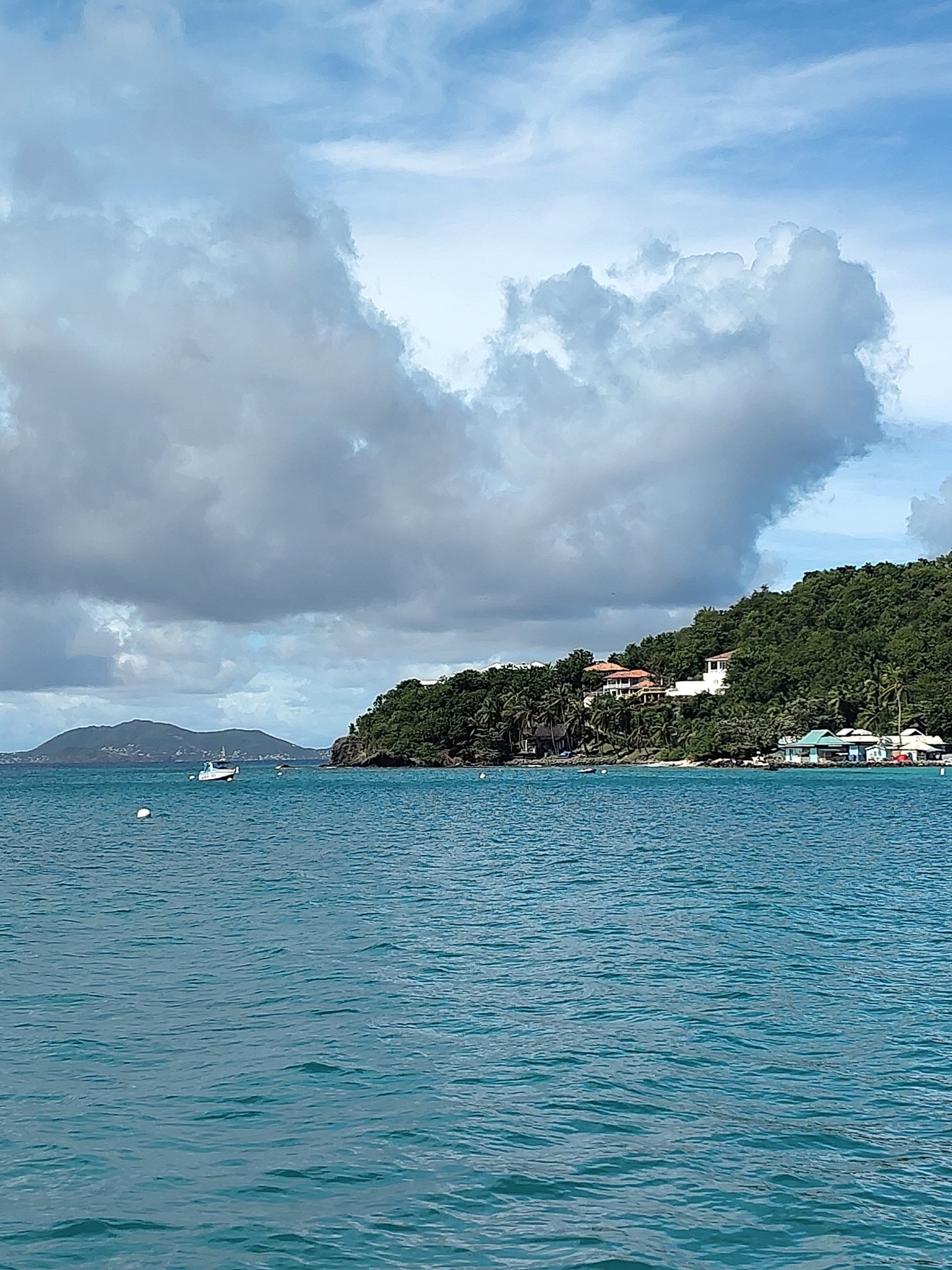
After leaving Mustique behind us and sailing along the east side of Bequia Island, contrary to our usual practice of passing the islands on the leeward side, we once again enjoy the pleasure of having almost a thousand metres of water beneath us. The Tobago Cays are extremely shallow and dotted with numerous reefs, which require caution. We reach the Blue Lagoon, another anchorage that can only be reached with great caution because there is also a reef in front of the lagoon here. In addition, the tide is falling, which makes the entrance even more problematic. Before we tackle this task, we take a closer look at the location and decide to sail a little further to St. Vincent and Chateaubelair Bay. This is also the last point where it is possible to clear customs for St. Vincent and the Grenadines.
Grenadines, Mustique - St. Vincent, Chateaubelair Bay
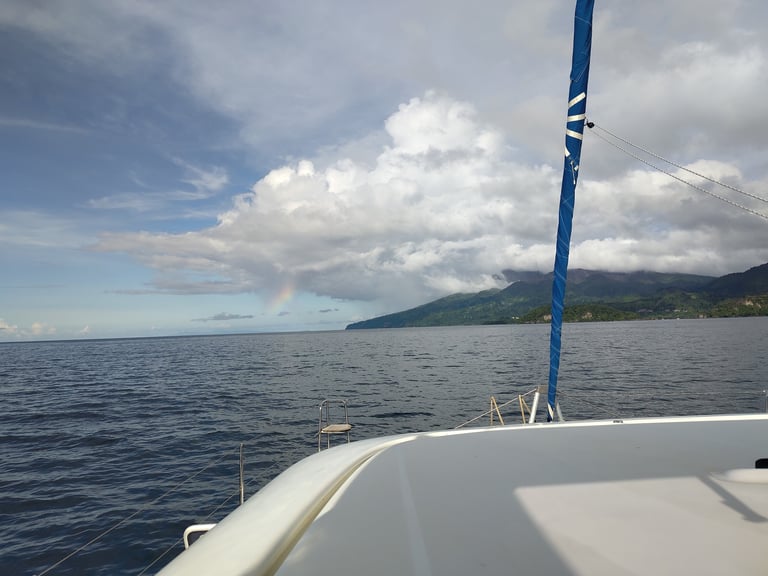
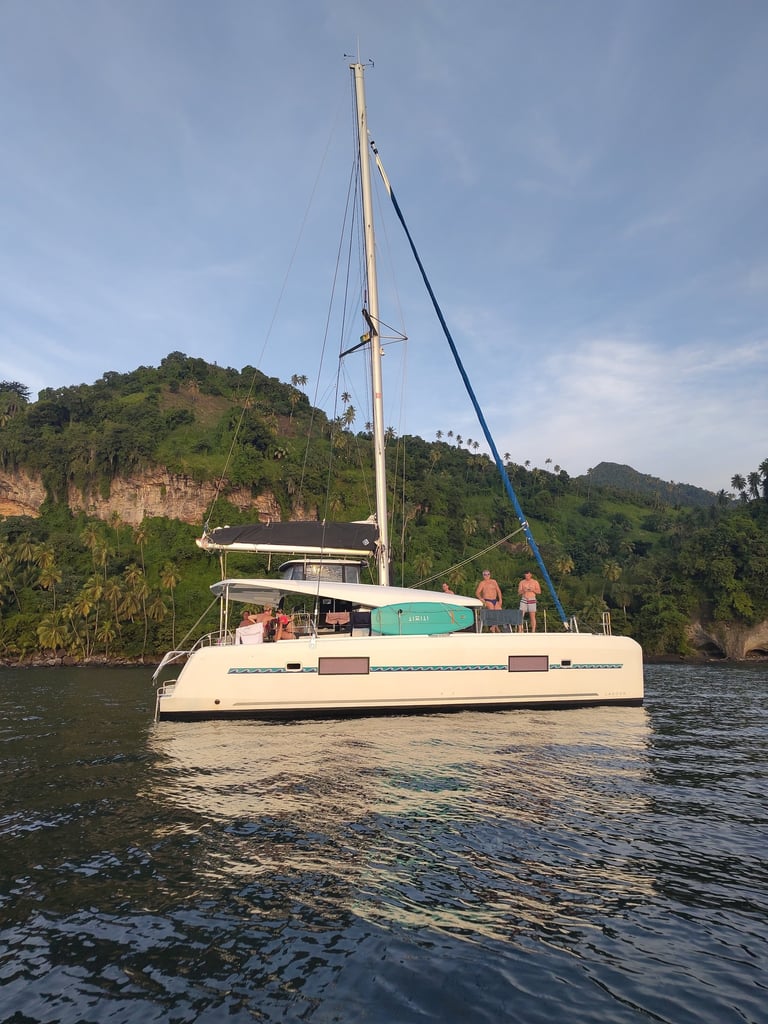
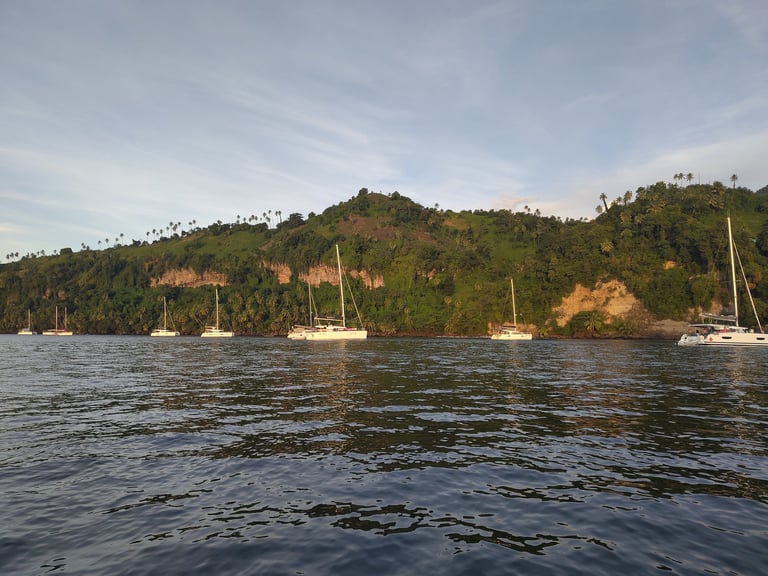
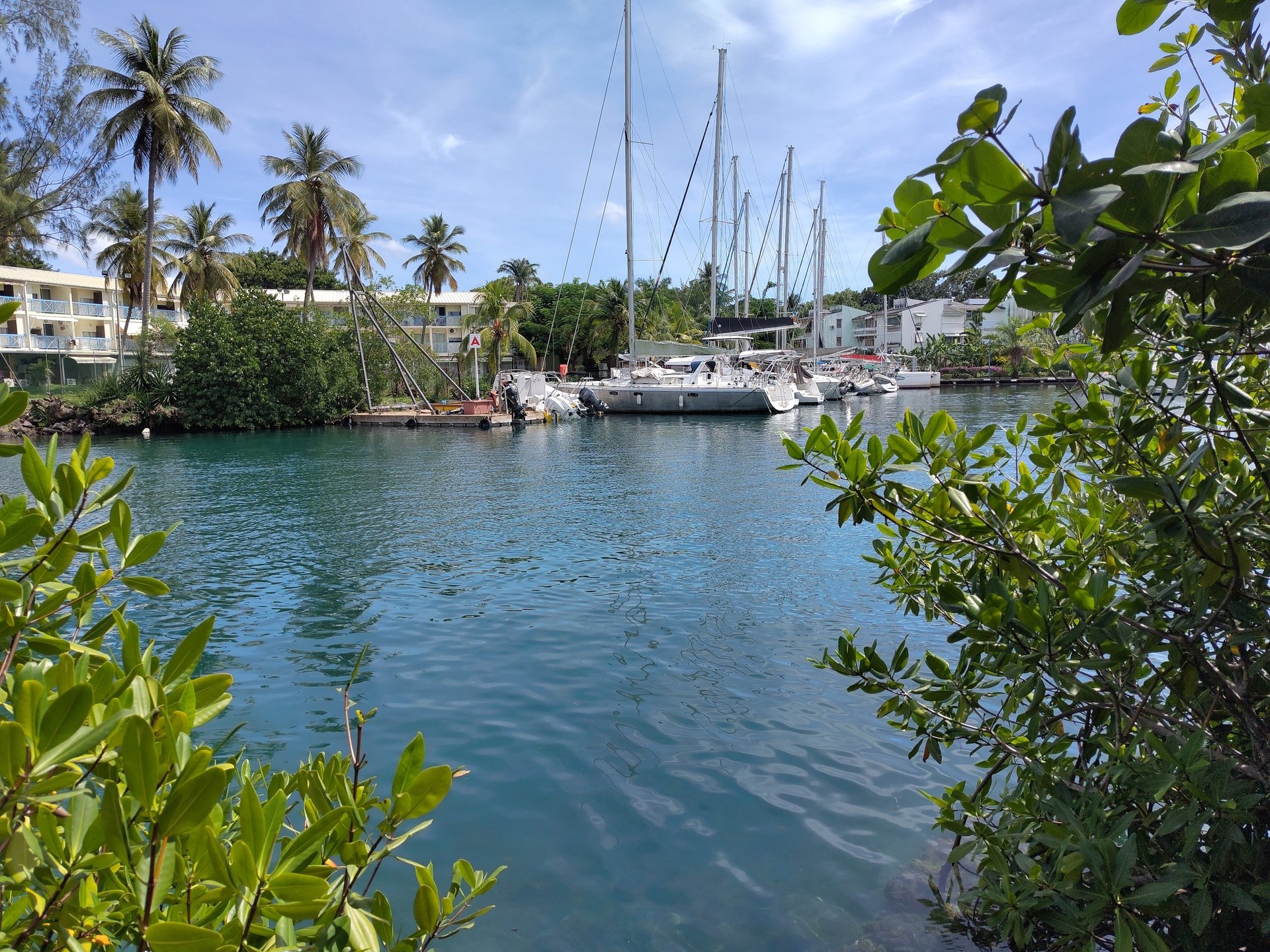
This time, we need to anchor again after spending most of our time moored to buoys. Several yachts are already at anchor, and we select two possible gaps where we want to carry out our manoeuvre. However, two more yachts are approaching on the port side, which could challenge our selection. After the first monohull enters the bay at high speed, we also increase our speed so as not to leave the space to the catamaran behind us. We manage to find a spot with sufficient distance and drop anchor in the northern part of the bay, which is recommended for anchoring in Navily. After laying out a good length of chain, we're settled. The disadvantage of this spot is that the quay for clearing customs is very far away. Will our sputtering dinghy outboard motor manage it? There are also quite a few waves on the beach. I heard from another skipper that someone tried to land there but was washed away. I don't want to try that experiment myself.
We reach a mooring and are greeted by a group of young people who help us with the mooring lines, but not entirely selflessly. He will look after our dinghy, he tells us. Of course, this comes with a tip. The other two dinghies are moored to the shore with a solid steel chain. This doesn't really inspire confidence.
On the way to the office, we are once again inundated with offers of services. I only manage to get rid of Boy-Boy by photographing his ‘business card’. Of course, I don't want to keep it from anyone :-).
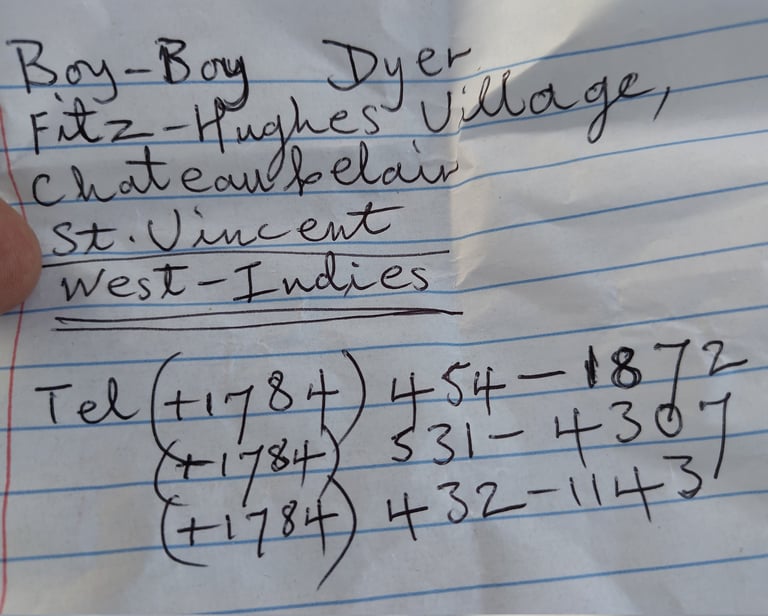
The office can be accessed via a back courtyard, in front of which a few men are loitering, and it looks anything but trustworthy. But perhaps we are simply being too critical and cautious. In any case, the two officials are fetched from somewhere and then take us to the processing room. The counters have a hatch with wooden bars above them, giving the whole place the impression of being from a bygone era. In fact, however, it is helpful to have submitted the Sailclear documents online and to simply provide the confirmation code.
After this clearance, we proceed to the neighbouring counter for departure. This is taken care of, but, as with customs, we are charged 35 XCD ES$ or simply Easy. If I understand correctly, this amount is collected if you do not leave the country on the same day, otherwise it is free of charge. Everything will be fine.
In the morning, the anchor is raised, the windlass slips again slightly and the chain can only be retrieved with a little help by hand. I mentioned this when the yacht was handed over. Simply tighten the windlass a little with a winch handle and everything works perfectly. We could have figured that out ourselves.
Our journey takes us to St. Lucia. However, the St. Vincent Channel has a surprise in store for us shortly after the island. Heavy rainfall has spread a thick carpet of driftwood, coconuts and debris in front of us. We pass this unpleasant spot at slow speed or with the engine idling. There are really large chunks in the way. After 10 minutes, however, this nightmare is over and we continue our journey.
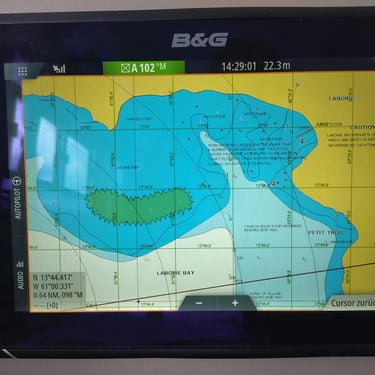
A glance at the map reveals that the entrance to Laborie Bay is also extremely treacherous. The chart material on board has long since passed its half-life, and the chart plotter cannot be trusted unconditionally either – at the entrance to Marigot Bay, I already saw that the plotter had conjured us up on land and that we had to factor in an inaccuracy of several tens of metres. So we can't enter this bay. Fortunately, some friendly sailors have posted the following contact details in the Navily app, which I like to use to prepare for a suitable anchorage, and which I can highly recommend.
St. Vincent, Chateaubelair Bay - St. Lucia, Laborie Bay
John Junior
Phone: +1 (758) 729-0628
Before entering, be sure to contact Junior so that he can guide you through the reefs. He will then assign you one of his buoys, which should be reserved in advance by telephone. He will take care of the supplies or even a table at Mama Tilly's, where you can really immerse yourself in Caribbean life and enjoy some great homemade rum.
An extraordinary experience, don't miss it!
Recommended Contact
The crew enjoys their evening at Mama Tilly's Restaurant, while I remain on board and have some time to document the trip. A little later, the crew returns and there is some negotiation with the taxi boat (or rather, they want more money).
In the morning, we have to stock up on water for the last time. Contrary to information provided by Navily, there is actually a possibility to refill water for free from an almost hidden pipe at the jetty. But first we have to wait until an excursion catamaran has loaded its tourists and vacated the spot. We approach the jetty and moor gently. All fenders are in use, and that is necessary. The swell lifts our catamaran up and down significantly, making it a rough mooring. We try to stabilise the boat with all kinds of mooring lines and replenish our supplies.
We make it out of the bay and the reefs without any problems. I have recorded our entry using several programmes so that we can follow the same route as on the way in. It's not that easy, as the current is not to be underestimated and pushes our ship eastwards. As soon as we reach deeper water and have freed ourselves from the many fishermen's markers, we head north-west, past the Pitons of St. Lucia, to find another bay for swimming and, if possible, reach Rodney Bay again.
St. Lucia, Laborie Bay - Epilog
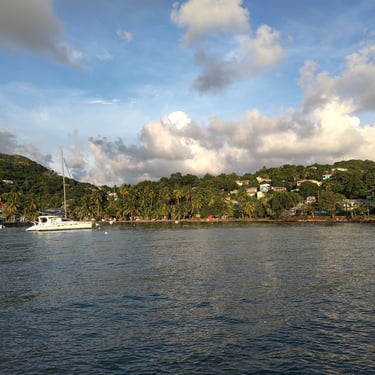
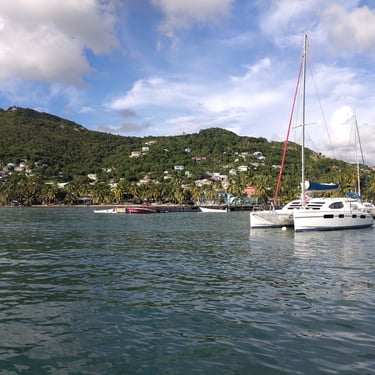
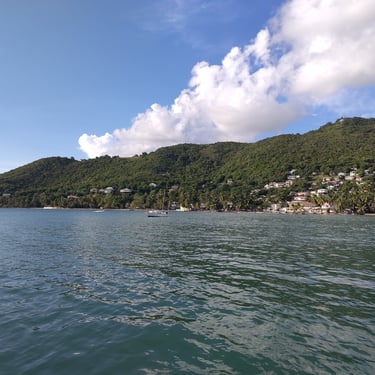
Our journey takes us past several recommended bays north of Soufrière. Recently, mooring buoys have been installed there for a fee, and anchoring is prohibited in the bays themselves.
Cruising Area Restrictions
In St. Lucia, anchoring is strictly forbidden in Soufriere in the area managed by the Soufriere Marine Management Area, but they do supply moorings.
However, these moorings are located in places where the beautiful beaches are difficult to reach and look unattractive. So we continue on, always on the lookout for possible stops.
Passing Marigot Bay and the harbour of Castries, we look for a small, undocumented anchorage, Anse Galet. There is room for one boat, so we drop anchor and can get into the water. Could. Because a few jellyfish spoil the fun for those who want to swim.
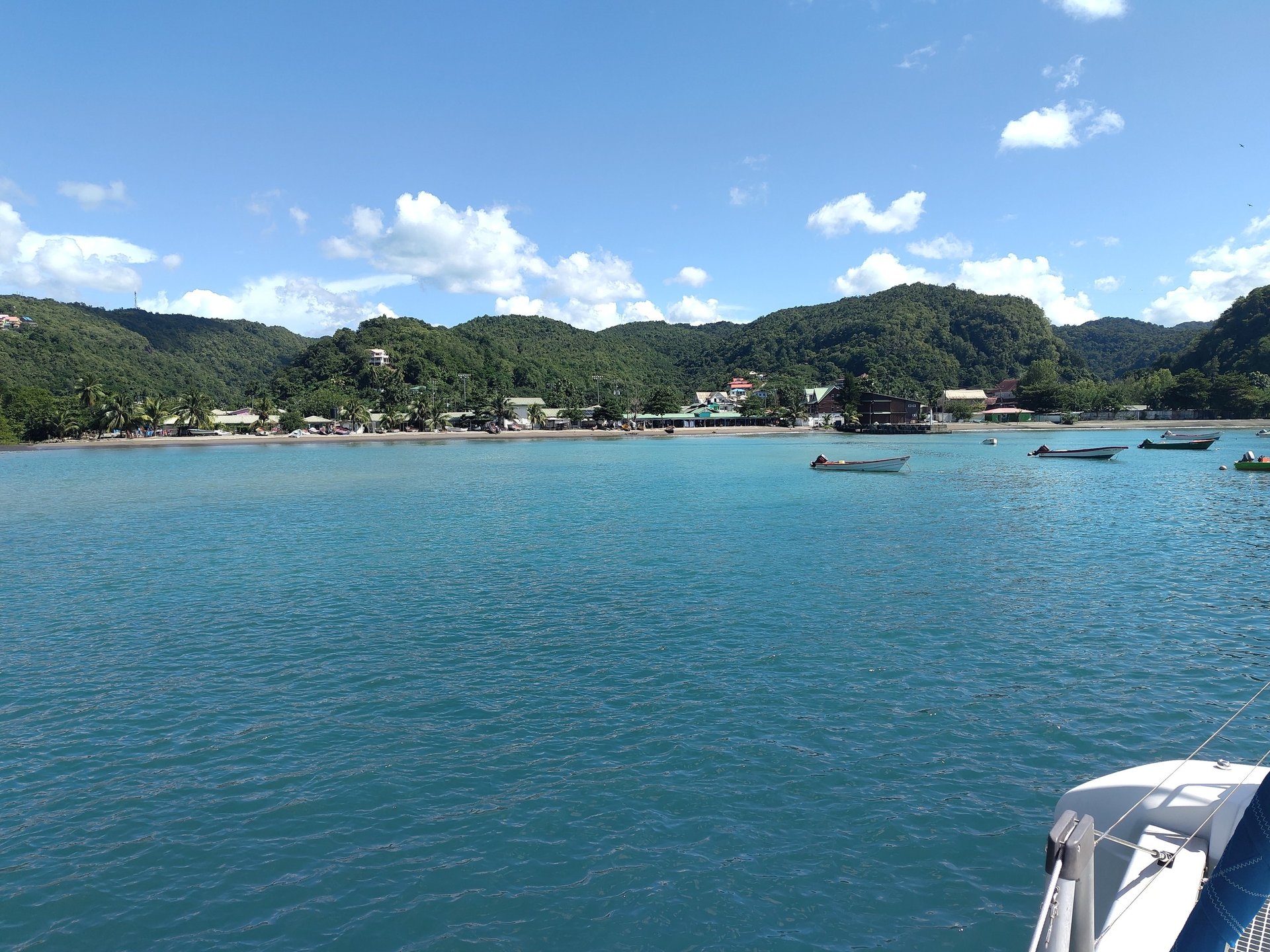
So we continue on to Anse la Raye. The depth information on the map is once again suspect, so we feel our way forward in the northern part and drop anchor at a sufficient distance from the fishing boats. A water depth of over 5 metres is comfortable for now. Here, swimming and snorkelling are possible, as is a visit to the beach. The bay makes a sleepy impression; we see hardly any people, only work being done at the small shipyard.
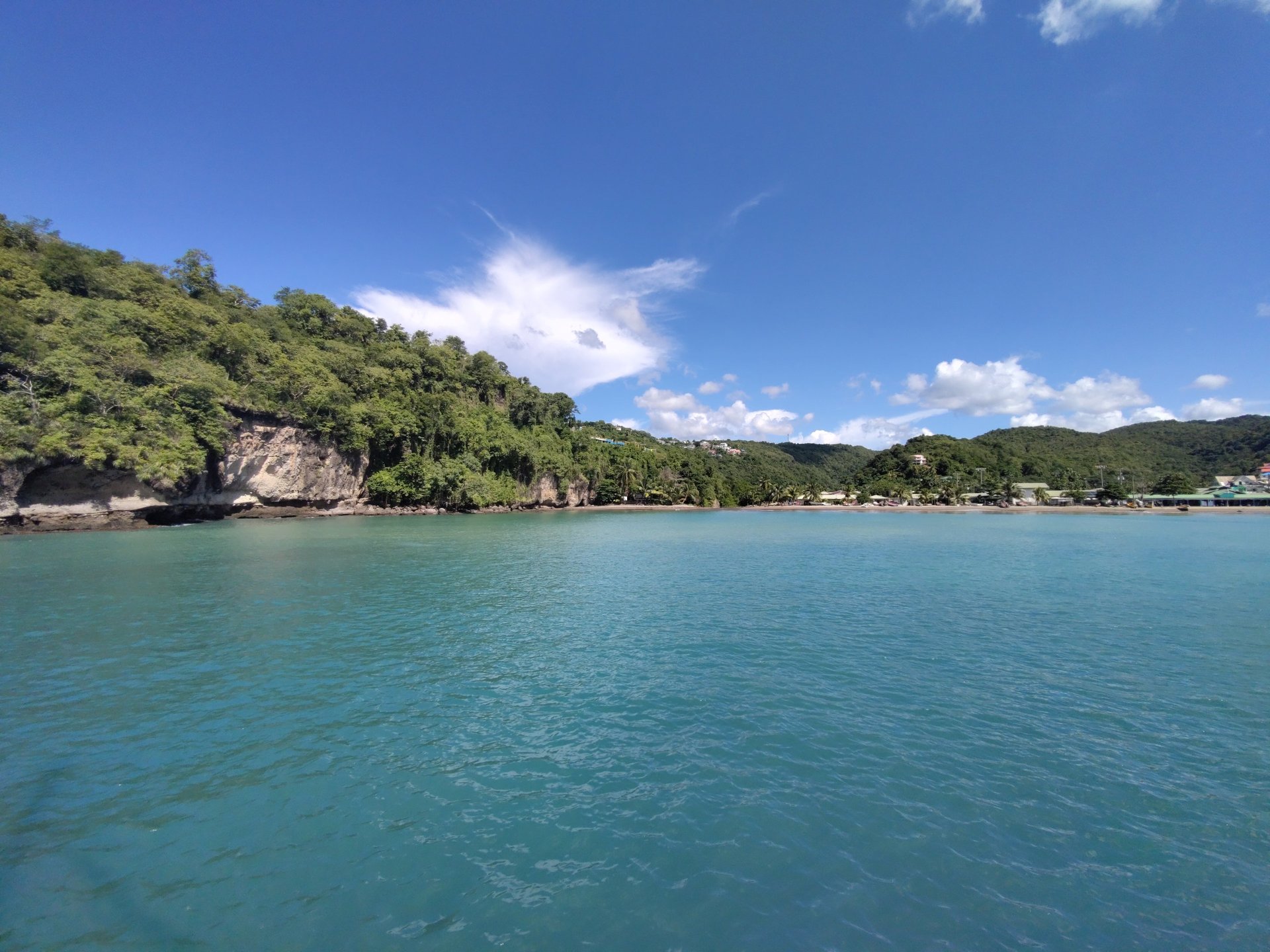
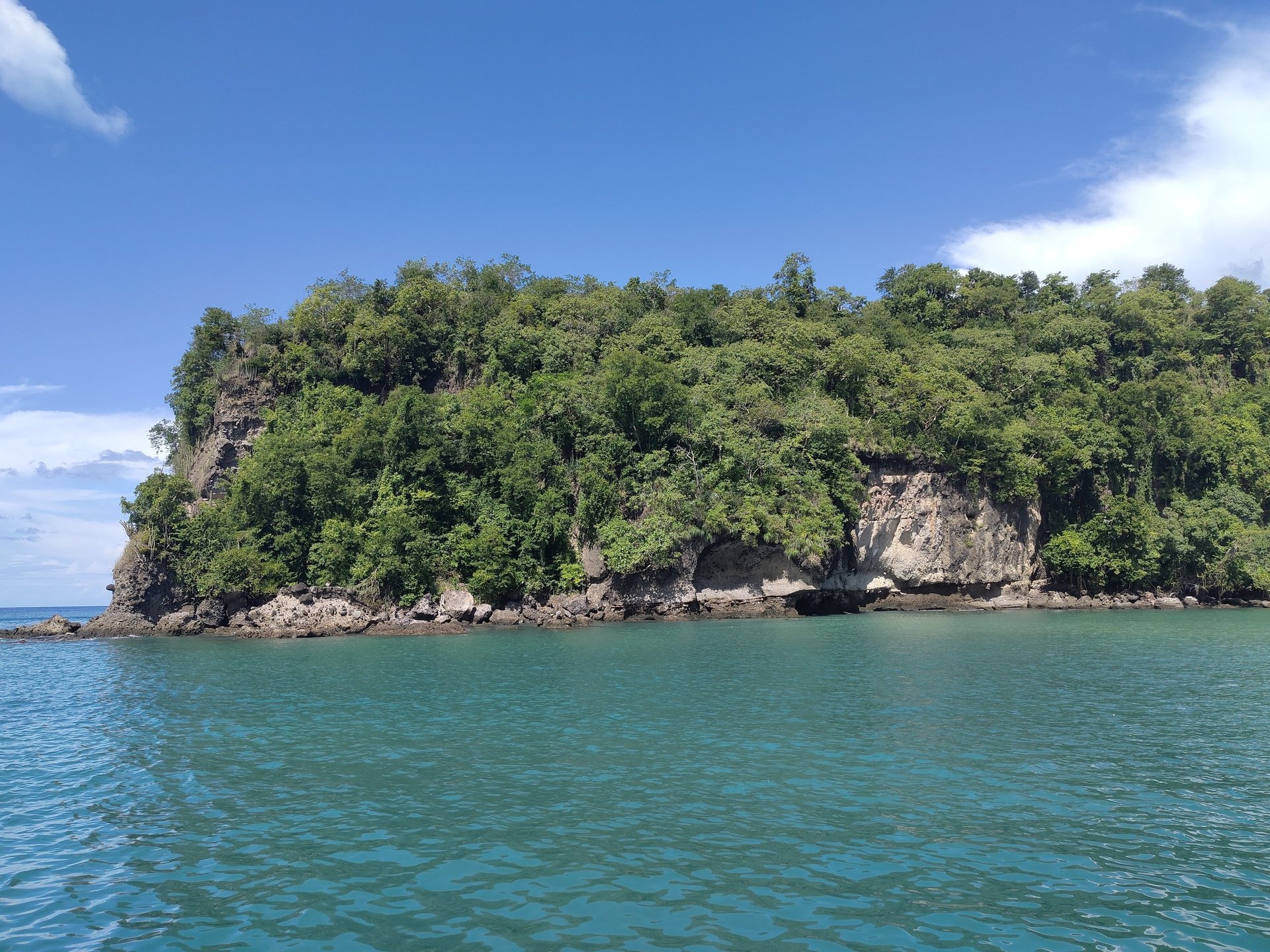
The wind conditions are favourable in terms of wind strength. But the wind direction is changing. I notice that we are drifting more and more towards the rock formation in the north. And according to the depth gauge, the water depth is now only 3 metres. Time to set off for the day's destination and head for Rodney Bay.
After a night at anchor, again without clearing customs and after some tough negotiations with a ‘floating trader’ who still has a few souvenirs to sell, the last day of the trip is upon us. Before we moor the yacht in Le Marin, we want to find a beach to swim at. We leave St. Lucia behind us early in the morning, and after crossing the three-mile zone, I feel a sense of relief. Unfortunately, there is not enough wind for sailing, only when one of the mighty rain clouds passes by does it pick up, but with rapidly changing directions. The sails remain down.
We head for Sainte-Anne beach on Martinique. Whereas at the start of our trip we avoided the shallow water zone offshore, we now slowly feel our way to the front row of anchored sailing boats. And even now in November, before the start of the actual season, there are many. Very many. And that detracts from the charm of the bay.
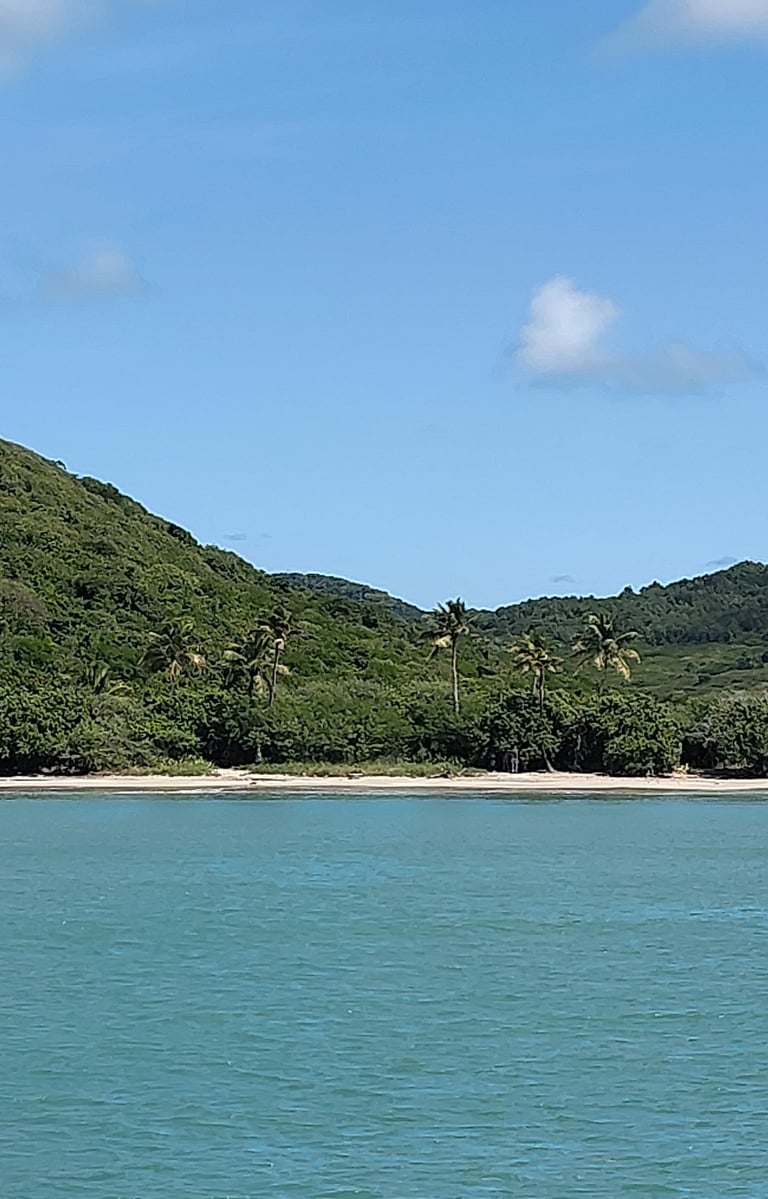
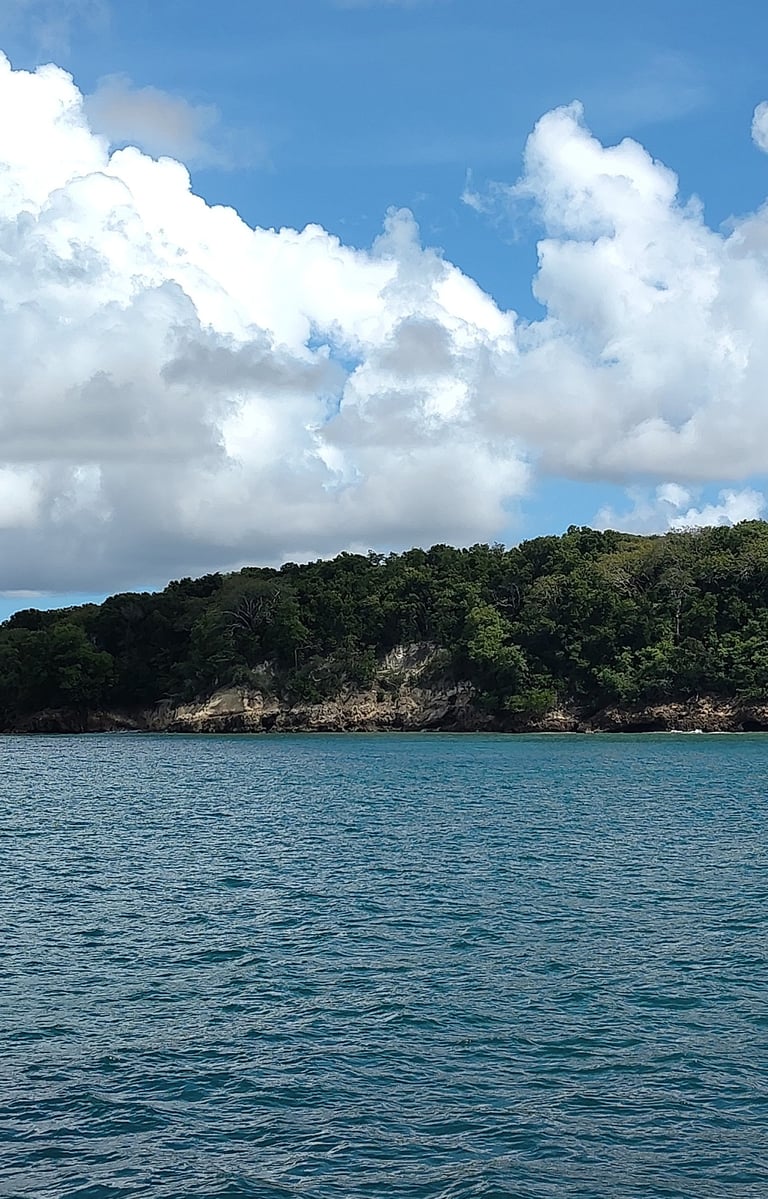
According to the chart plotter, Grande Anse de Salines is not approved for anchoring. We didn't see any yachts anchored there as we passed by. It's also too far away for a short detour. There are no yachts in Anse Meunier either, just south of Ponte Dunkerque. Interesting, I would have expected it to be on the French North Sea coast in the Département du Nord. Our charts are of no help with regard to the water depth, and it also seems possible to encounter sandbanks in this bay. Our helmsman boldly steers closer and closer to the beach. With a water depth of 1.7 metres indicated, I ask him to stop the boat and drop the anchor. Sand swirls up, the depth gauge can no longer work and only shows three lines. Hopefully, everything will be fine. At least the location is, shall we say, exceptional. But we are alone in the large bay, and the swimmers among the crew can enjoy themselves here.
It's exciting to see that half an hour later, another catamaran tries its luck in the bay, but is moored much further out. And soon another keelboat joins them. Apparently, they are waiting to see if anyone has found a place to anchor before venturing in themselves.
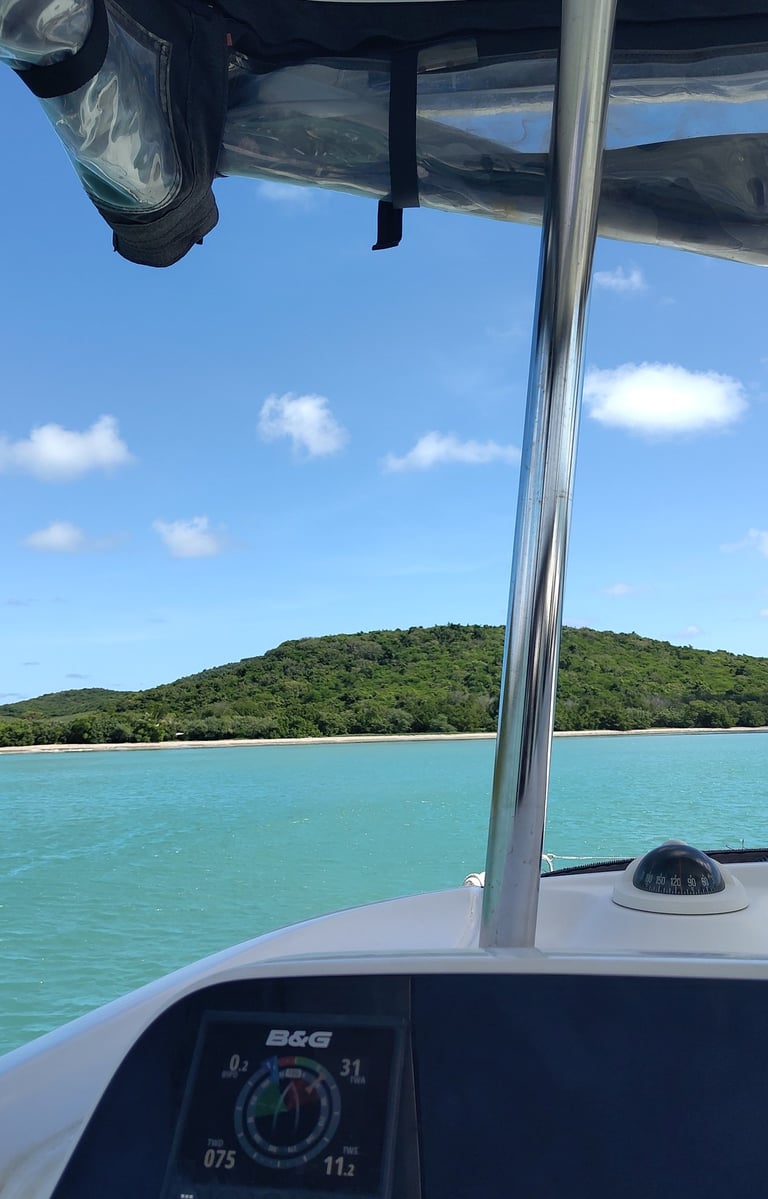
Just in time for the handover and refuelling with diesel, we set off on the last leg of our journey. The entrance to the marina still takes some getting used to, but we pass all the cardinal marks and moor at the petrol station. There's no one ahead of us, which is something you don't experience every day. The catamaran is moored to its jetty again, this time with moorings for the bow. I actually have to dig out my sailing gloves because the rope is covered in mussels.
These two weeks have flown by. We take with us a wealth of good impressions, and a few bad ones too, encounters with lovely people, an insight into how the people here live and cope with the stroke of fate caused by Beryl... And the beauty of nature, both flora and fauna, which has left a lasting impression on me.
Contact
Write me
+49-162-5401120
© 2026. All rights reserved.
Social links? No Facebook, no X, no Instagram. Such platforms have no place in my world.